Four things brands need to know about the new era of branded merchandise

Branded merchandise is evolving into a core marketing strategy, helping brands build engagement, loyalty, and cultural relevance beyond traditional advertising.
This shift is here to stay. Given Gen Z’s rejection of traditional advertising, merch fills the gap as a crucial engagement platform and a gateway to the brand’s ecosystem. And for the growing numbers of people who belong to fandoms – a source of joy for 80% of consumers – these objects act as a tangible expression of identity, values and belonging.
Let’s take a look at some leading industry examples and how they’re mastering this new era of branded merch.
High-low brand collaboration blends expand reach
A leading example of this trend is Handbags by New York label Susan Alexandra normally retail for hundreds of dollars but her signature bright, beaded aesthetic recently showed up in an unexpected place: a line of limited-edition drinks carrier for McDonald’s, each one matched to a specific drink. It’s a compelling example of how modern merch can collapse traditional luxury hierarchies, cleverly merging premium aesthetics with mass-market accessibility.
The tms take: High-low brand collaborations are an effective merchandise strategy for both partners, expanding audience reach by allowing premium brands to gain relevance and visibility while mass brands borrow cultural cachet and design credibility.
Unexpected brand collaboration drive cultural relevance
Partnering with IP or creators is an effective way to gain cultural equity, but the best executions go beyond superficial logo swaps and find synergy in unexpected places. One of the most notable unexpected collaborations is the Eternal Playlist Urn from canned beverage brand Liquid Death and Spotify. Shaped like a funeral urn, this limited-edition resin speaker was paired with a personalized playlist (generated by prompts such as “What’s your eternal vibe?”) to provide the soundtrack to the owner’s afterlife. Fusing Liquid Death’s irreverent heavy metal aesthetic with Spotify’s music fandom, it turns merch into a piece of entertainment in itself.
The tms take: Unexpected, cross-industry brand collaborations drive cultural relevance by combining novelty, emotional resonance, and social shareability into a single merchandise moment
‘Frenemy’ collaborations create viral merchandise moments
For example, a pair of fast-food rivals in the UK recently leveraged their overlapping target audience to create a novelty menu item. A Greggs’ best-selling Sausage Roll drenched in KFC’s signature Gravy, the co-branded “Gravy Meets Pastry Sharing Bucket” was available in select cities via delivery for a strictly limited time. Such an absurd pairing created instant social media traction and driving scarcity-fuelled demand.
The tms take: “Frenemy” brand collaborations feel inherently newsworthy because they disrupt category expectations, helping brands unlock new audiences while amplifying cultural cachet through surprise and humour.
Future-proof your branded merchandise with AI-Powered Personalization
A new wave of connected merch is emerging, turning collectible objects into ever evolving experience hubs. Led by musicians and streetwear brands, early adopters are already distributing designs embedded NFC chips or QR codes, which open exclusive content – such as playlists, virtual events, VIP offers, and fan communities – when tapped or scanned. As AI advances further, this ‘smart swag’ will be able to deliver more individualized recommendations and entertainment based on user behavior.
The tms take: AI-powered and connected merchandise transform merch from a static product into a personalized experience hub, enabling ongoing engagement, data capture, and relationship building.
Trending

tms puts a shiny, new spin on McDonald’s Canada’s fan-favorite game for Monopoly Golden Edition
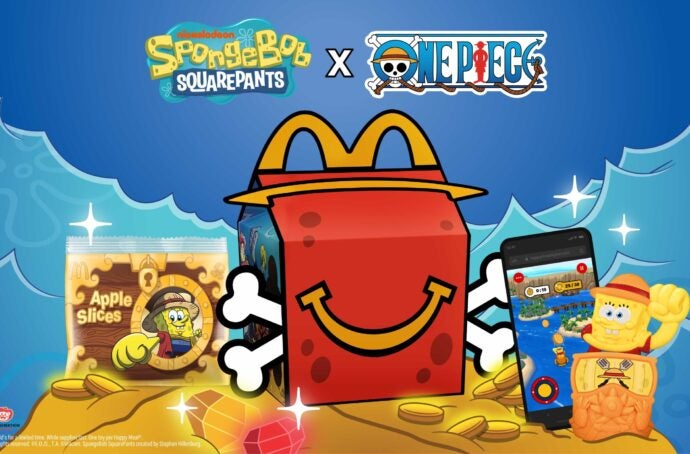
The worlds of SpongeBob SquarePants and ONE PIECE collide for McDonald’s latest Happy Meal collab