From transactional to transformational: creating a loyalty program customers love

To turn transactional rewards into meaningful loyalty, brands need to give as good as they get: making membership feel reciprocal and fair, choosing partnerships that genuinely add value, and adding a dash of magic with personalized perks or surprise gifts along the way.
Spend money, increase points, redeem, repeat – this earn and burn model has powered loyalty programs for decades. But in an increasingly competitive and saturated marketplace, smart brands are raising the bar. Points still matter, but we’re also seeing more experiential or personalized ways of recognizing loyalty come to the fore. Ultimately, the most successful schemes turn a rewards mechanism into a relationship where customers feel recognized, valued and, in turn, devoted.
Programs that pull this off have real business impact: 78% of US and 70% of UK customers say a good loyalty program would make them choose a brand over its competitors, rising to 82% in the UAE.
With several research papers on the topic under our belt, we’ve looked back over our findings to distil four key lessons for building brand loyalty.
Show that loyalty’s a two-way street
Brand loyalty is seen as a reciprocal relationship, akin to a friendship, by 74% of Americans and 63% of Brits. They’re not signing up for a fling: just under three-quarters join loyalty programs with the intention of continuing their relationship with the brand long-term. That expectation is even stronger in the UAE, where 81% of respondents say loyalty is a two-way street.
Acknowledge your members with micro-moments that make membership feel like a meaningful rapport, rather than a database entry. Think: a personalized offer that proves you’ve been paying attention, early access to coveted event, or upgraded service when it counts.
Some successful tactics include:
– Recognize the relationship’s history | SkyMiles Runway by Delta SkyMiles’ created personalized year-in-review experiences based on each member’s actual travel history, awarding playful badges for distinctive behaviors
– Offer money-can’t buy perks | Nike gives committed sneaker fans advance looks at forthcoming footwear and the opportunity to purchase exclusive, limited-edition products
– Acknowledge personal moments | Sephora’s 45m+ North American Beauty Insider members can choose a birthday gift from favorite brands or opt for 250 bonus points
– Remember what matters to them | Sephora impresses again; in its UK-based MySephora’s program, members are asked to nominate two ‘Brands You Love’ which then become an ongoing part of that customers’ rewards offering
Keep your calculations clear & consistent
While the above shows how rewards are diversifying, points absolutely still have a place in the loyalty ecosystem. In fact, 71% of respondents told us they join loyalty programs explicitly to earn points and receive discounts.
When structuring your points system, simplicity rules. Progress needs to be straightforward and transparent, so members easily understand how points translate into rewards. tms’ proprietary research in The Gamified Customer Journey revealed that confusing program structures and high effort-to-incentive requirements were some of the most common reasons for decreased engagement in loyalty schemes.
This echoed tms’ panel discussion Brand Loyalty – Building Relationships That Last, which flagged how “points fatigue” can set in if consumers feel they have to “game” the system to get anything in return; 73% of US and 81% of UK customers told us they preferred simple ways to earn rewards.
Lastly, once a value system is established, beware of moving the goalposts. A considerable 57% of US and 64% of UK customers said this would make them shop with a brand less. Remember the backlash when British Airways overhauled its membership scheme, tying perks to spend rather than distance travelled?
Bring the right brands into play
Supporting a ‘buddying up’ approach, the ability to earn and redeem points across multiple brands was considered very or extremely important by 63% of shoppers in the US and UK. This appetite travels across markets: 75% of UAE respondents say they’re more likely to join a loyalty program that partners with brands they already love. Be selective about the company you keep, though. Nearly half of consumers (49%) believe brands can have too many partners and would be put off if you partner with a business that doesn’t share their values. Bring in only those brands that have a genuine synergy with your own and a benefit to your members.
For an example of a partnership that adds utility without feeling arbitrary, consider Hyatt and Delta Air Lines recent move to sync two complementary parts of customers’ travel plans: flights and hotel stays. Eligible elite members are now able to simultaneously earn rewards with both brands, who share a focus on premium experiences and hospitality.
Sprinkle on some surprise and delight features
There’s a big difference between getting the reward you’ve earned and receiving something purely because a brand appreciates you. For 68% of Americans and 63% of Brits, surprise rewards are very or extremely important, while birthday rewards matter to 59% and 48% respectively.
A little generosity goes a surprisingly long way, whether that’s free shipping out of the blue or small gift tucked into an order. The magic is often in the element of surprise, not the price tag.
Surprise has longevity, too, as 39% of consumers told us that an instant win after making a purchase would motivate them to stay loyal.
Building next generation loyalty programs – the bottom line
Moving beyond the classic earn and burn loyalty model requires balancing transactional value with emotional resonance. By pairing simple point calculations and program mechanics with partner synergy, genuine two-way reciprocity, and surprise mechanics, brands can transform routine transactions into lasting customer advocacy.
Looking to modernize your brand’s loyalty strategy? Download the full research insights in our proprietary report, The Gamified Customer Journey, or contact our team to audit your loyalty program.
FAQ’s
Sources: Data and insights sourced from tms’ proprietary industry studies and webinars: Loyalty: What Customers Really Want, The Gamified Customer Journey, and Brand Loyalty – Building Relationships That Last.
Trending
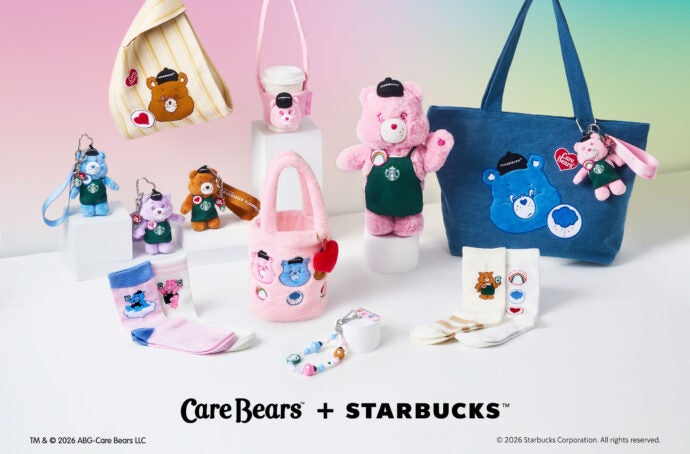
tms brings the Starbucks x Care Bears “Cheers for Sharing” merchandise collab to life

Alice Chi Martin shares why integrity is non-negotiable in leadership with Little Black Book