tms’ Talent Acquisition Specialist shares why positive candidate experiences matter
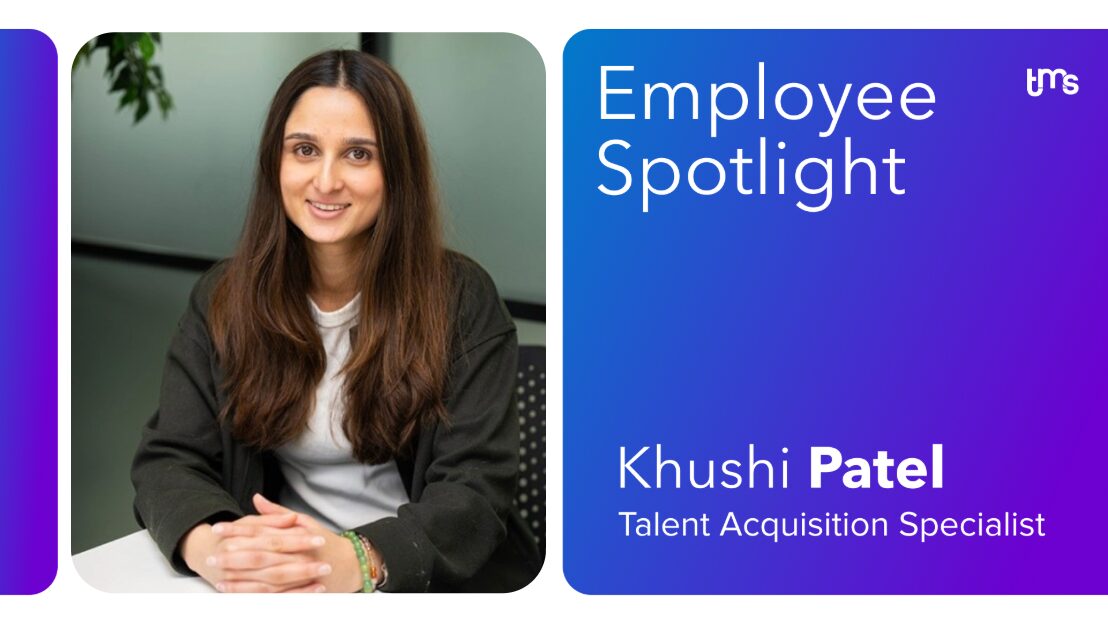
For Khushi Patel, Talent Acquisition Specialist at tms, helping people find the right opportunities isn’t just a job — it’s a source of pride and purpose. Born and raised in Hong Kong before moving to the UK to study psychology at the University of Exeter, Khushi has always been fascinated by people: how they think, what motivates them, and how they grow. That curiosity ultimately shaped her career path, guiding her from the agency world into recruitment — and eventually to tms.
Through her work in Talent Acquisition (TA) across the EU, she helps refine interview processes, strengthen how we help our people develop in their careers, and maintain a value‑centered approach in a rapidly evolving hiring landscape.
One thing I love is that sense of reward when you’re able to help someone – even if they don’t get a job through us, you’re still able to provide feedback that they’re quite grateful for.
Check out our full conversation below, where Khushi talks about her path into recruitment, the behind‑the‑scenes work of the TA team, supporting women and early‑career talent, and what she’s watching in the world of hiring trends:
How would you describe your role as a Talent Acquisition Specialist?
I’d say we’re a connection point between individuals both inside and outside of tms. We work to connect all sorts of people…internal employees within the business as well as external candidates who may join us. Externally, it’s about selling the candidate experience, making sure we’re working with hiring managers to shape processes and what they want in a role. Ultimately, we want tms values to shine from that first touchpoint.
What’s a common misconception people have about the TA team or your role?
I think the common misconception is that TA is only there to fill roles — and obviously that is our main job — but there’s a lot more to it than that. We work on projects that make recruitment processes smoother, help hiring managers who might be new to interviewing, and coach them on how to improve the candidate experience.
We also work on a lot of behind-the-scenes work: like the internal mobility process map and the interview framework project.
The internal mobility process is designed to help us retain strong talent by giving employees a clear, consistent way to explore and apply for new roles across tms. And the interview framework ensures a consistent, structured, and inclusive approach to interviewing by outlining clear roles, competency‑based techniques, and best‑practice guidance so we can assess candidates fairly and deliver a high‑quality experience.
What have you noticed candidates get excited about when first learning about tms?
The first thing people always mention is, ‘The work you do with McDonald’s is so exciting!’ That’s always a big one. And then some candidates notice the awards we’ve won, like the Best Places to Work awards, which get highlighted a lot.
Ultimately, I think the two main things candidates look for are positive company culture and being able to contribute to meaningful work. The awards recognize us a being strong in both of those areas.
March is Women’s History Month. What are some important ways to better support women candidates in the recruiting process?
I think flexibility is something that’s really important in recruiting. Some women have taken career breaks or are mothers returning from maternity leave — meaning gaps in careers are more common in women than in men. It’s about having that understanding and making sure recruitment conversations and interviews are spaces where they feel comfortable to talk about it without judgment.
What advice would you give early‑career women looking to get into people‑focused roles?
I’ve always been told — and still get told — to stay curious and keep asking questions. In people‑focused roles, you’re trying to build relationships, and the way you build relationships is by asking questions and trying to learn more about different people.
The more you put yourself out there and stay curious, the more you’ll get back. It helps you understand the business better too. tms is quite complicated, and you only understand it by asking questions. My biggest advice is stay curious.
Looking at the recruiting landscape, what are the current trends you see?
I’ve got two… and they kind of contradict each other. First, everyone’s talking about AI and how it’s going to impact recruiting. We already see AI incorporated into tools like LinkedIn, and even SuccessFactors has its own AI tools.
But on the other side, because AI is growing so quickly, there’s also been a push for more human‑centric recruitment. Candidates really value that human touchpoint — someone actually reaching out to them. tms does a good job of making sure we are always speaking to candidates. That’s something that differentiates us.
Interested in working in a global, people-first environment? Check out our open roles.
Check out the video below for Khushi’s tips on nailing a job interview below:
Trending

tms’ Carina Collins shares micro-influencer marketing strategies with Ad Age

tms puts a shiny, new spin on McDonald’s Canada’s fan-favorite game for Monopoly Golden Edition